
Simpler Time-of-Use Schedule in 2027
A new residential Time-of-Use (TOU) rate structure takes effect in January 2027. This change affects customers differently depending on what rate schedule they take service under.
The new, simpler schedule features the following pricing periods:
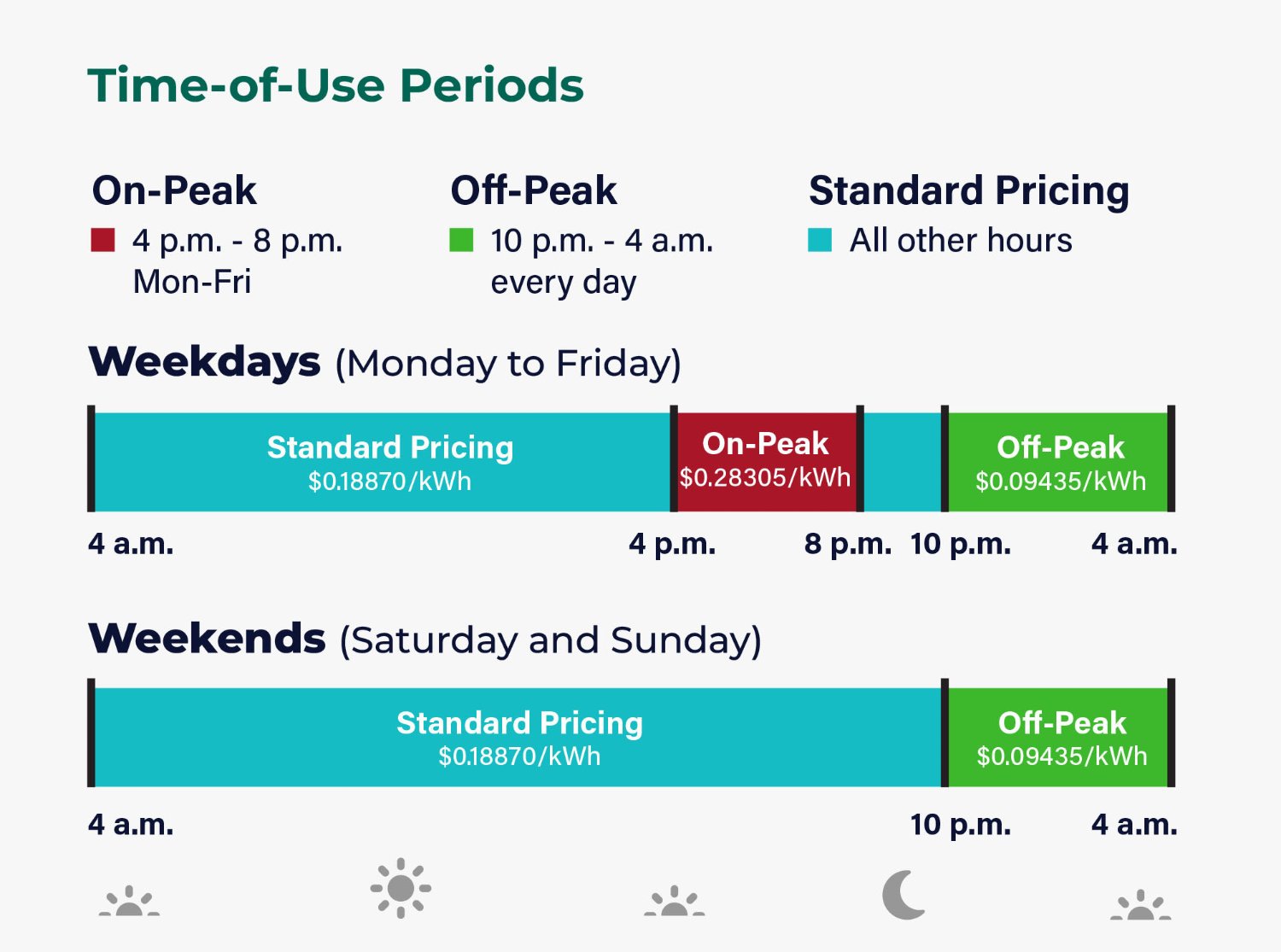
On-peak periods, when demand on the electric grid is highest, have the highest energy rates.
How does this change affect me?
If you're able to shift some energy use to off-peak hours—such as charging an electric vehicle overnight or using appliance timers—TOU may provide an opportunity to save on energy costs. However, TOU is not a guaranteed savings option and may not be the best fit for every household.
Customers enrolled in TOU will automatically be moved to the new rate structure on January 1, as the old structure will no longer be available.
Participation in TOU continues to remain optional for residential customers.
What should I do differently?
Customers on TOU who can shift some of their electricity use to off-peak hours may have the opportunity to reduce energy costs.
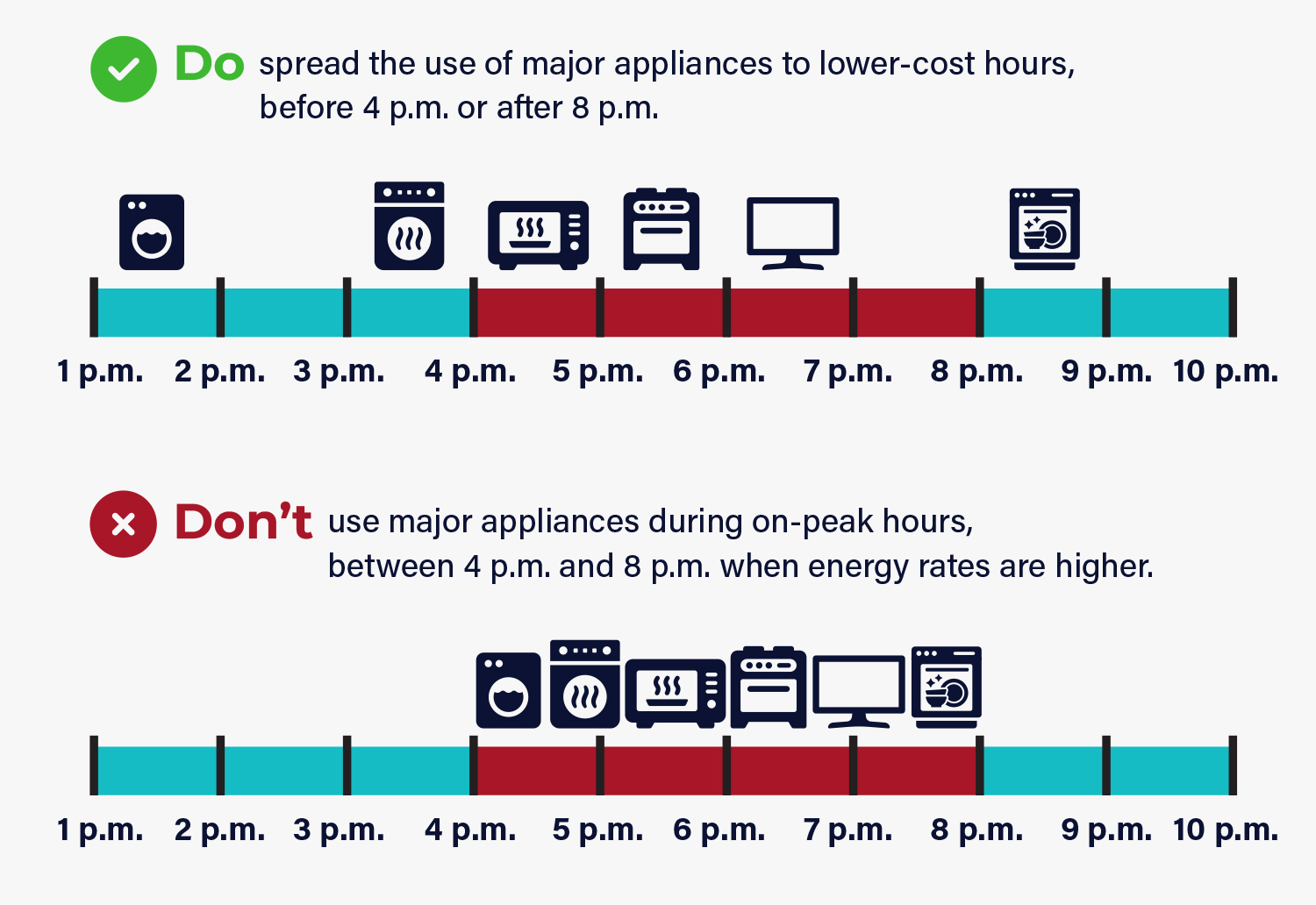
The easiest loads to shift are those that don't need to operate immediately, such as:
- Electric vehicle charging
- Dishwashers
- Clothes washers and dryers
- Dehumidifiers
- Pool pumps
- Some electric water heaters
Frequently Asked Questions
Rates will depend on the schedule that you take service under. Under the new TOU schedules, all rates outside of the four-hour On-Peak period are lower than the default rate schedule (Rg-1, $0.19294/kWh).
The following rates will apply to customers on the Rg-2 and Rg-2A rate schedules:
| TOU Pricing Period | TOU Rate | Default rate (Rg-1) (not enrolled in TOU) |
|---|---|---|
On-Peak | $0.28305/kWh | $0.19294/kWh |
Off-Peak | $0.09435/kWh | $0.19294/kWh |
Standard | $0.18870/kWh | $0.19294/kWh |
Please email askexperts@mge.com if you have additional questions.
The redesigned TOU rate structure will feature a simpler schedule. In addition, there will no longer be a separate holiday schedule.
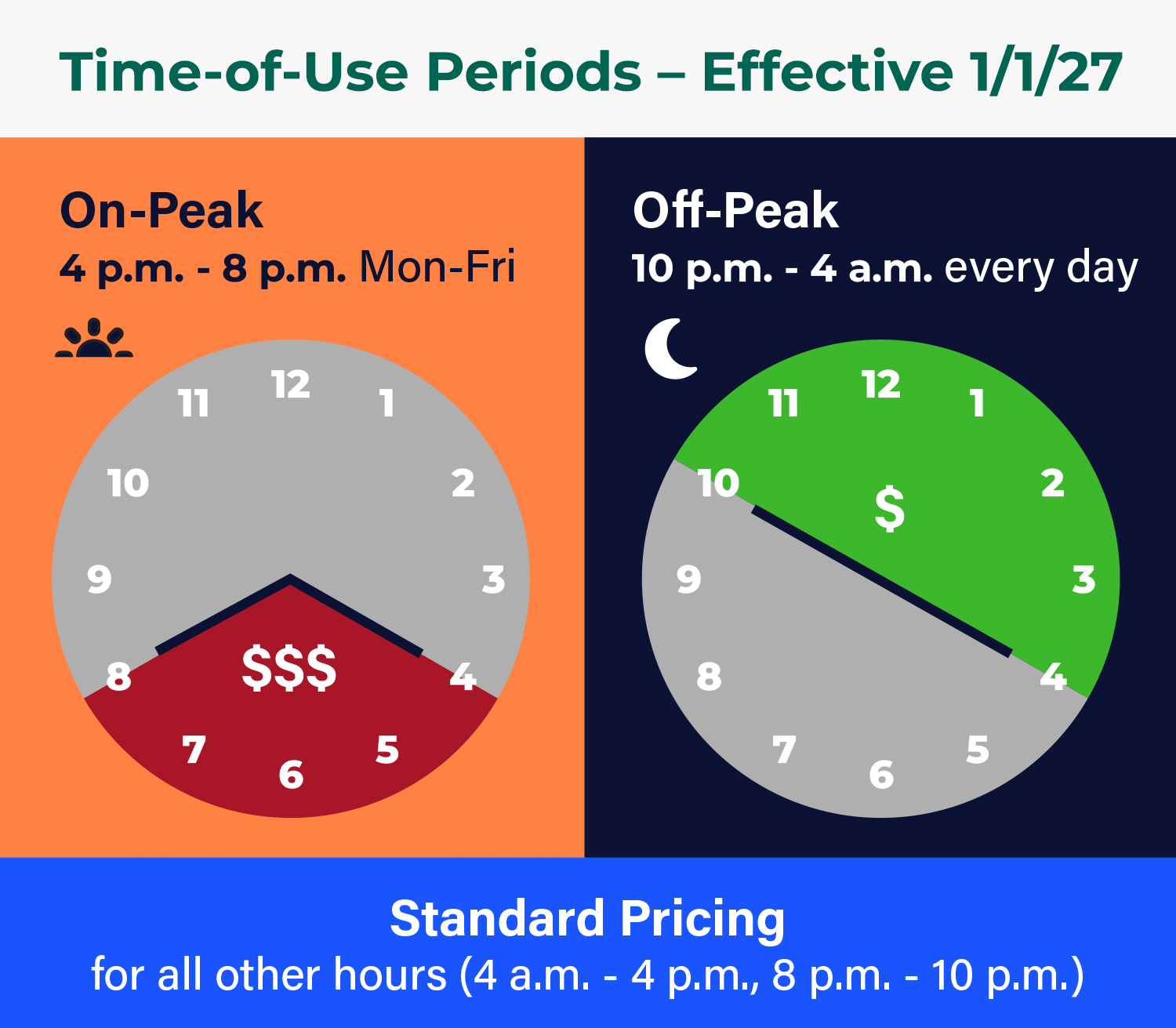
The new TOU rate structure takes effect January 1, 2027. Customers enrolled at that time will automatically be moved to the new structure.
Customers enrolled in TOU as of January 1, 2027, will automatically be moved to the new rate structure.
Participation in TOU continues to remain optional for residential customers.
Yes, weekends will be part standard pricing and part off-peak pricing. There will no longer be a separate holiday schedule.
In 2027, there are no seasonal changes in rates.
Customers who can shift some electricity use—such as electric vehicle charging, laundry or dishwashing—to off-peak hours may have opportunities to reduce costs; however, TOU is not a guaranteed savings option and may not be the best fit for every household.
The impact to your bill depends on when you use electricity. Customers who use more electricity during off-peak hours may see lower costs, while customers who use a large portion of their electricity during on-peak hours may see higher costs. Shifting the use of high-energy appliances and devices to off-peak hours can help reduce costs.
Yes. We can review your historical usage and provide an estimate of how the new TOU rate structure may affect your bill. Email askexperts@mge.com to request a personalized review.
The impact depends on when you are currently using electricity. Customers whose energy use already aligns with off-peak periods may see little change, while customers who regularly use large amounts of electricity during higher-priced periods may see higher costs. Reviewing and adjusting the timing of high-energy activities can help manage costs under TOU rates.
The best option for you depends on when and how you use electricity. Customers who can shift some energy use to off-peak hours may benefit from TOU rates. If you're not sure which rate is best for your household, email askexperts@mge.com to request a personalized review.
Households that can reduce electricity use during the on-peak period (4 p.m. to 8 p.m.) and shift activities such as electric vehicle charging, laundry, dishwashing or other high-energy uses to off-peak hours may have opportunities to lower their energy costs.
Households that use a large portion of their electricity during the on-peak period (4 p.m. to 8 p.m.) may see higher costs. Homes with a high electrical baseload may also have fewer opportunities to shift energy use to lower-cost periods.
Baseload is the electricity your home uses throughout the day, even when no one is actively using appliances. It comes from equipment that runs continuously or cycles on and off automatically, such as refrigerators, dehumidifiers, internet equipment, sump pumps, aquariums and electronics in standby mode.
Possibly. Under the new TOU rate structure, most regular business hours are billed at the standard rate. Because the on-peak period is limited to 4 p.m. to 8 p.m., many customers who work from home may find it easier to manage their energy use than under the current TOU rate structure.
Customers on TOU who can shift some of their electricity use to off-peak hours may have the opportunity to reduce energy costs. Consider shifting laundry, using the dishwasher, charging an electric vehicle and running a dehumidifier, heat pump or air conditioner to off-peak hours (10 p.m. to 4 a.m. every day, including weekends).
The easiest loads to shift are those that don't need to operate immediately, such as:
- Electric vehicle charging
- Dishwashers
- Clothes washers and dryers
- Dehumidifiers
- Pool pumps
- Some electric water heaters
Most customers can benefit from TOU rates simply by adjusting when they use certain appliances; however, timers, smart plugs, programmable thermostats and home automation devices can make it easier to schedule energy use during off-peak hours. Many electric vehicles, thermostats, water heaters and smart appliances already include scheduling features.
MGE’s new TOU rate structure includes an overnight off-peak window from 10 p.m. to 4 a.m.—a time that may align well with charging an electric vehicle (EV). If you currently have your EV programmed to charge at 9 p.m., please note the new off-peak time and consider adjusting to start charging at 10 p.m.
If you have solar panels
If your solar panels produce more electricity than your home is using, the excess energy sent back to the grid will continue to receive a bill credit. The value of that credit depends on the distributed generation rate schedule you are enrolled in. Some customers receive credits based on the TOU period when the energy is exported, while others receive credits at a default rate regardless of the time of day.
If you have a battery
A battery may help you reduce energy costs by storing electricity when prices are lower and using that stored energy during higher-priced on-peak periods. Depending on your battery system and how it is programmed, it may help you avoid purchasing electricity during the most expensive times of day.
If you have electric heating, a heat pump or electric water heating
Many electric heating technologies, including heat pumps and electric water heaters, can work well with TOU rates. Customers may be able to lower costs by using programmable thermostats, adjusting temperature settings during higher-priced periods or taking advantage of equipment features that shift energy use to lower-cost off-peak hours. Because every home and heating system is different, the impact of TOU will vary by customer.
Energy costs vary throughout the day. The new rate structure better aligns electric rates with periods of highest grid demand and supports more efficient use of the electric system. The new structure is designed to be easier to understand and manage.
MGE’s TOU rate remains optional. You have the option to cancel your enrollment, even if you have been enrolled for less than the required 12 months. You can join the program in the future if you change your mind; a 12-month commitment would be required at that time.
There is no deadline to decide whether to remain on TOU or return to the default residential rate. We encourage customers to review the new TOU rate structure and choose the option that best fits their household's energy-use patterns.
If you'd like help evaluating whether TOU or the default rate may be a better fit for your household, email askexperts@mge.com to request a personalized review of your energy use and rate options.
If you would like to return to the default residential rate, please email askexperts@mge.com. We can help you review your options and process your request.
Shared Solar:
- The way your Shared Solar energy is applied to your bill remains unchanged. For customers on TOU rates, Shared Solar energy is allocated across TOU periods based on their usage patterns. Participation in Shared Solar does not require you to leave TOU; however, in some cases, Shared Solar and TOU might not be the best combination. For example, if your Shared Solar subscription covers most of your monthly electricity use, there will be little remaining energy consumption to bill under the TOU rate.
Charge Ahead:
- TOU customers benefit from automated off-peak charging, which can help optimize electricity cost savings. Customers enrolled in both Charge Ahead and TOU rates will not receive Charge Ahead program incentives. Instead, they receive the benefit through the lower TOU energy prices available during off-peak charging periods.
Net metering:
- If you have solar panels or another eligible generation system, your excess energy exports will continue to be credited according to your applicable distributed generation rate schedule. Customers on different distributed generation tariffs may receive credits differently, including whether credits vary by TOU period or use a default buyback rate.
Green Power Tomorrow (GPT):
- GPT participation and charges are separate from TOU and will continue to appear as a separate line item on your bill. Eligible customers may also participate in both GPT and Shared Solar.
Residential customers can call the MGE Energy Experts at 608-252-7000 or email them at AskExperts@mge.com.
Energy-Saving Tips
Reduce your energy usage and lower your bill with these resources from MGE.
Start here