Energy Awareness Month: Does Your Household Make the Grade?
Test your energy-saving knowledge ahead of the winter heating season.
Students are heading back to class, and the heating season is just around the corner. October is Energy Awareness Month, so now is a great time to test your energy-saving know-how with our quick quiz!
Heating and cooling are typically the biggest energy users at home. Setting back your thermostat when you’re asleep or away can improve your home’s “energy report card” and save you money.
Before setting back:
- Check with your doctor if someone in your household has a medical condition that requires specific temperatures.
- Check the owner’s manual for your heating system to see if there is a recommended minimum temperature.
- If you’ve had problems with pipes freezing during extremely cold weather, address the problem before setting back your thermostat.
Recommended thermostat settings:
| Home, Away or Sleeping | Winter* | Summer |
|---|---|---|
| When you're home | 68° | 78° |
| When you're not home | 60° | 85° |
| When you're sleeping | 60° | 78° |
*Or as low as health permits. Check the owner's manual for recommended temperature settings, particularly if you plan to lower the temperature for more than 24 hours.
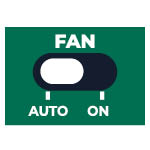
The "AUTO" setting only runs the fan when the furnace is actively heating or cooling, saving electricity. For most homes, using this setting is the most efficient choice. In addition, continuous air movement with the "ON" setting can evaporate moisture off your skin in the winter, making your home feel colder than it actually is.
The recommended temperature setback depends on the type of heating system in your home:
- Natural gas furnaces should always be set back for savings—even an hour will help you save energy.
- Electric resistance heat and boiler heat should be set back to save energy, but it will take longer to return to the desired temperature than a forced-air natural gas furnace.
- If you have a heat pump, consider setting the temperature back 2 to 3 degrees for at least eight hours. More significant and frequent changes can cause the unit’s electric-resistance backup to kick in, which can be costly. Larger setbacks make sense when you’ll be away for several days at a time (turning the temperature down to 60 degrees, for example).
While October is Energy Awareness Month, the heating season, from approximately Oct. 1 through May 15, is when many Wisconsin households use the most energy to stay comfortable during colder weather.
Energy assistance
If your family or someone you know is having trouble paying utility bills, resources are available to help. The Wisconsin Home Energy Assistance Program (WHEAP) offers energy assistance to income-qualified households. Applications open Oct. 1. Apply online at esi.help or by phone at 800-506-5596.
MGE also has resources available for eligible customers, including Payment Arrangements, Budget Payment Plans and our Back on Track program. For more information, go to mge.com/help or call Customer Services at 608-252-7000.

Common reasons for higher-than-normal energy bills include:
- Space heaters
- Electric water heaters
- Electric heat
- Thermostat settings
- Colder-than-normal weather
- Longer billing periods (for example, February has 28 days while March has 31)

From highest to lowest energy use, the list for a typical household would be:
- Electric dryer
- ENERGY STAR-rated dehumidifier
- Refrigerator
- 55- to 65-inch LED TV
- Mobile phone
Why?
An electric dryer is typically the largest energy user on this list. While an ENERGY STAR-rated dehumidifier is efficient, it can still use a significant amount of electricity if it runs many hours each day. Refrigerators run continuously but are generally efficient, while LED TVs and cell phone chargers use comparatively little electricity.
Earn an "A" in energy savings
Whether you're adjusting your thermostat, understanding how your heating system works or identifying major household energy users, small changes can add up throughout the heating season.
This Energy Awareness Month, make energy efficiency part of your curriculum—and help your household earn top marks for saving energy and reducing your environmental footprint.
Look for more seasonal energy-saving tips at mge.com/save.
MGE’s Energy Experts can provide tips and answer your questions about saving energy at home any time of year! Email them at AskExperts@mge.com or call them at 608-252-7000.
published: Aug. 31, 2026
