

Powering Data Centers
Safety and reliability are part of our core values at MGE. Your community energy company is consistently top-ranked for electric reliability among utilities nationwide.
We know that large energy users—like data centers—raise important questions about their impact on our community and energy affordability. Our collaborative approach to serving prospective large customers is designed to protect our existing customers while supporting economic development.
Our customers rely on MGE for safe, reliable, affordable and sustainable energy to power their households and businesses. As your community energy company, MGE is committed to supporting our area’s growth responsibly and in a way that meets the needs of all customers.
How MGE serves
MGE has decades of planning, investment and operational excellence to support our top-ranked reliability. That foundation helps to ensure we’re prepared to serve evolving energy needs, including those of large-scale data centers, without compromising our obligation to serve all customers safely, reliably and affordably.
Reliable, secure, high-quality energy is essential to our local economy and to emerging industries like AI and data-intensive technologies. MGE is committed to supporting innovation—in a way that maintains a strong, resilient and adaptable grid—while protecting other customers from cost and service impacts. By keeping our grid strong, adaptable and ready for growth, we help to advance energy security and economic development in our community.
Wisconsin has a robust regulatory compact to protect customers. The Public Service Commission (PSC) governs almost all aspects of utilities—including the rates customers pay, approval for new generating facilities, potential environmental impacts of operations and service to customers—to help ensure safe, reliable and affordable service.
The PSC has no direct regulatory oversight of the construction or operation of data centers. However, it does regulate the utilities that serve them.
Will a data center in the Madison area increase my electric bill?
No. MGE’s rate proposal for very large customers protects other customers from cost and service impacts while supporting economic growth.
In July, MGE filed an application with State regulators proposing a new rate designed specifically for very large new electric customers. If approved, the Very Large Customer (VLC) rate will be for customers with an energy demand of 100 megawatts (MW) or greater. This rate is intended to support growth opportunities in our service territory while protecting existing customers from the incremental costs associated with serving very large customers, such as data centers. Existing customers would, however, benefit from the increased resiliency provided by any grid upgrades necessary to serve a data center or other VLC.
The proposed structure ensures that growth pays for growth: the customer whose load drives the need for new facilities, resources and transmission-related obligations is responsible for those costs. Other electric customers will not be subsidizing the costs of service to very large customers who choose to locate in MGE’s service territory.
MGE’s VLC rate proposal is similar to other rate designs recently approved by State regulators for other Wisconsin electricity providers. To learn more about our proposed rate, please see our FAQ.
Data center development could help to advance clean energy
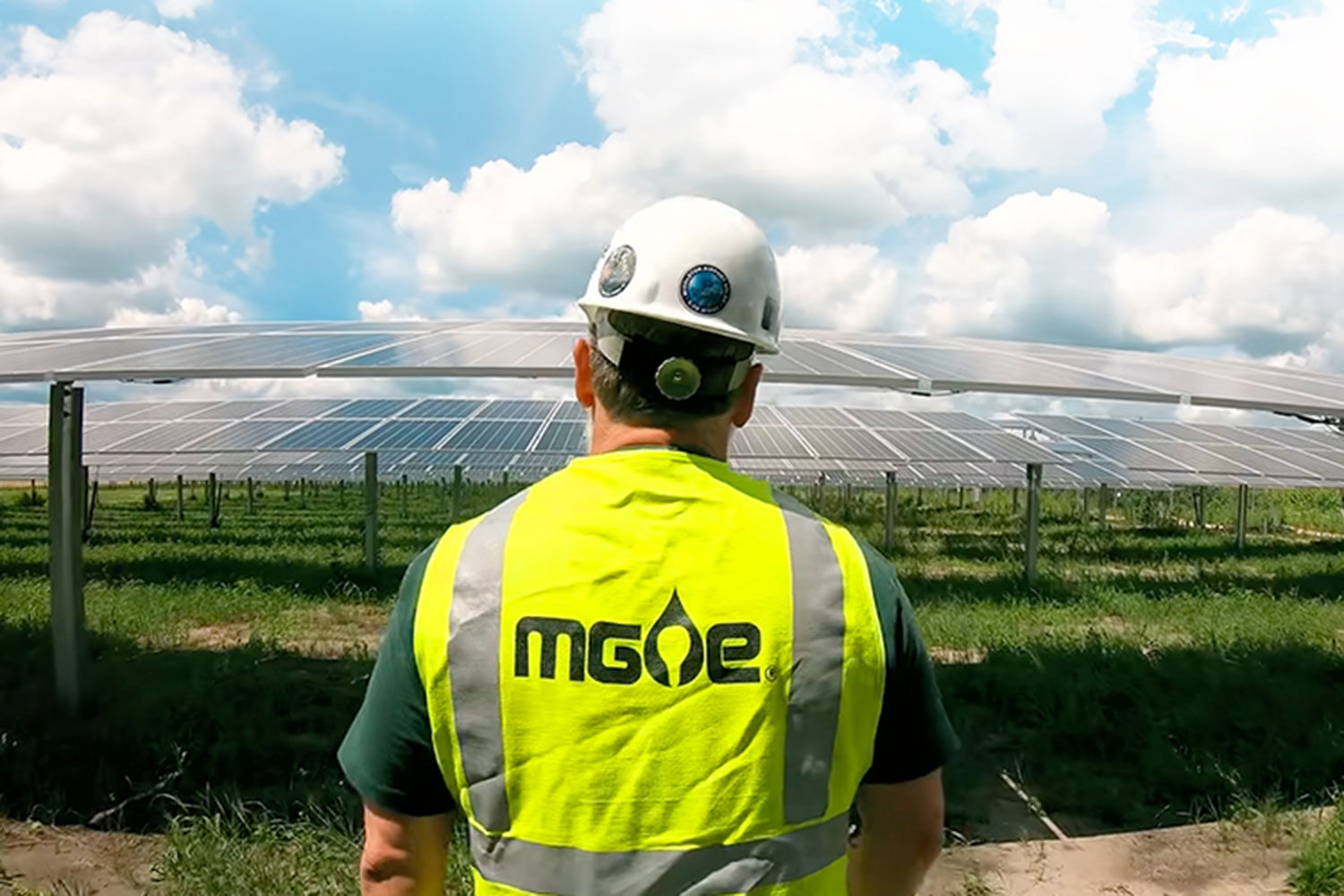
MGE is building a more resilient and adaptable grid as we evolve with new and emerging energy technologies and the needs of those we serve. We continue to work toward our goal of net-zero carbon electricity, investing heavily in cost-effective, carbon-free generation.
Data centers are high energy users and create demand for energy. Their sustainability goals could help further—or even accelerate—the transition of the electric grid toward cleaner energy sources through MGE investment in clean energy to power data center operations.
Data centers and our community

What they do
Data centers are essentially warehouses for computing infrastructure—they help power the Internet. They're like a giant library of filing cabinets that store, process and transmit data, allowing access to digital materials, like photos and apps, and services, like video streaming and social media.

Part of everyday life
Data centers provide connectivity to enable our digital economy and everyday digital activities like sending email, online shopping and accessing our information in "the cloud." If you use a mobile phone or smart device, data centers help to keep you connected.
Already here
Several smaller, traditional data centers already operate in the MGE service territory, with companies using stand-alone facilities or operating data centers within their existing facilities. Each deploys technology integral to their business operations and customers. MGE has served these local data centers for years, working with them to meet their specific energy needs like we do with any other major commercial or industrial customer.

The needs of data centers vary with size and purpose. Our service territory’s smaller, distribution-connected data centers:
- Connect directly to the existing distribution grid,
- Use existing distribution and transmission infrastructure and;
- Provide measurable financial benefits to customers.
Their load lowers systemwide costs by spreading fixed distribution and generation expenses across more kilowatt-hours, helping to reduce rates for all customers.
As high energy users, all data centers create a steady demand for electricity. As more facilities consider our region, their sustainability commitments present a potential opportunity to accelerate MGE’s investment in clean energy and further advance investment in our systems. MGE’s ability to serve large commercial loads means we are ready to accommodate data center growth without harming service or affordability for existing customers.
Frequently Asked Questions
It would not raise rates for all other customers.
In July, MGE filed an application with the Wisconsin Public Service Commission (PSC) proposing a new rate designed specifically for very large new electric customers. If approved, the Very Large Customer (VLC) rate will be for customers with an energy demand of 100 megawatts (MW) or greater. This new rate is structured to ensure the very large customer pays the incremental costs associated with serving the facility and designed to prevent cost-shifts to all other customers.
Wisconsin has a regulatory framework to protect customers through State regulation that, among other things, provides for "just and reasonable" rates. Utility rates are set through a transparent, public rate-making process. MGE’s VLC rate proposal is similar to other VLC rate designs recently approved by the PSC to ensure protections for existing customers.
Wisconsin and the Midwest are seeing increased interest from large-scale energy users with electric demands of 100 megawatts (MW) or greater and who are significantly different from traditional customers. This often requires infrastructure, including generation facilities, to support their power needs. A VLC rate is intended to support growth opportunities in our service territory while protecting existing customers from the incremental costs associated with serving very large customers.
The rate is structured to ensure that the very large customer pays the costs of serving the customer’s facility. This means that the customer:
- Pays energy, transmission and market costs.
- Pays operations and maintenance costs.
- Must support the resources needed to provide reliable service, such as the generation resources.
- Must commit to resource-development obligations, provide and maintain long-term (10-year) load forecasts to support system planning and cover the costs associated with infrastructure built specifically to serve them.
As proposed, the VLC rate includes a minimum 15-year service agreement. That means very large customers remain responsible for certain obligations even if their service ends earlier than expected.
These provisions ensure other existing customers do not absorb any of the costs associated with serving the VLC.
A bespoke resource, or portion of a resource, is dedicated to a specific customer. For example, a solar farm could be a bespoke resource for a very large customer, such as a data center or manufacturing facility.
Under a bespoke resources tariff (BRT), the very large customer subscribes to all attributes for the customer’s bespoke resource or share of the resource. The participating customer pays a prorated portion of all costs of the resource equivalent to the customer’s share of the resource. For example, a very large customer, served under the VLC rate and bespoke service (or BRT), would enter into a service agreement with MGE to be served by a generation resource and be responsible for the costs associated with that generation resource, which is owned, operated and maintained by MGE.
The BRT creates a new option for VLCs to be served by dedicated energy resources that support their business and sustainability objectives. Participating customers would receive the benefits associated with their share of a resource and would be responsible for the related costs. The proposal is designed to support customer choice while protecting non-participating customers from those costs.
MGE would develop, own, operate and maintain the resource serving a customer taking bespoke service. The participating customer would subscribe to a designated share of that resource and would pay its share of the costs associated with the resource. The participating customer also would receive the resource-related benefits associated with its subscribed share, such as Renewable Energy Certificates (RECs). The terms for bespoke service would be established through an agreement between MGE and the customer and are subject to regulatory approval.
The nation continues to see an expansion in manufacturing, industrial and data center infrastructure. It’s reasonable to expect requests for service from very large customers in the future in MGE’s service territory.
MGE is being proactive by seeking approval for the VLC rate and BRT to ensure the company is prepared to meet its obligation to serve our existing customers reliably and meet our obligation to very large customers who may choose to locate in our service territory. These rate proposals protect existing customers from subsidizing customer-specific investments while also supporting economic development.
A larger, more diversified customer base can help lower energy costs.
There are costs associated with connecting a customer to the electric grid, regardless of how much energy that customer uses. These costs cover items ranging from our local customer service center and administrative costs to the poles, wires and other equipment that make up a dependable electric grid. All customers share the costs of building, maintaining and operating a safe, reliable and resilient electric grid.
When large customers, such as data centers, are added to the system, they can help manage these fixed costs by:
- Sharing the cost of the grid—As high energy users, data centers help by spreading the cost of maintaining the electric grid across more energy usage.
- Making more efficient use of utility infrastructure—Data centers are round-the-clock electric users with a consistent load, which makes better use of equipment built to meet the peak demand of all customers.
- Providing steady, reliable demand—With their high-usage and predictable needs, data centers can help to support long-term rate stability for all customers.
Any incremental grid investment by MGE to support a data center’s specific energy needs would be recovered through our proposed very large customer rate to prevent cost-shifts to all other customers. Refer to FAQ above for more information about the impact to rates.
Data centers are high energy users and thereby create demand for energy. Their sustainability goals could help further the transition toward a greener grid and even accelerate that transition through clean energy generation investment by MGE to serve that data center. Under MGE’s proposed Bespoke Resources Tariff (BRT), a bespoke resource, or portion of a resource, is dedicated to a specific customer. For example, a solar farm or other generating resource could be a bespoke resource for a very large customer.
We continue to work toward our goal of net-zero carbon electricity, investing heavily in carbon-free energy generation to serve all customers. Many data centers have sustainability goals, and MGE would collaborate to help them achieve those goals.
No. Serving new data centers would not negatively impact our service to other customers.
Investment in our distribution system on behalf of and paid for by a data center could serve to enhance the reliability and resiliency of our electric grid for the benefit of all. MGE would work closely with any proposed large-scale data center customer to develop a process that can fully support their needs, without putting strain on our current customers. This includes:
- Ensuring our existing customers remain protected, with no impact on their reliable service or costs.
- Planning for any new generation to meet the additional demand of the data center and paid for by the data center through our proposed VLC rate and BRT.
- Identifying any other required system upgrades, paid for by the data center, to meet their needs and to maintain robust system performance.
While data centers use a large amount of electricity, reliability is essential and part of MGE’s fundamental obligation as a critical services provider. Our collaborative approach through Wisconsin’s established regulatory process grows the grid responsibly while keeping power reliable for everyone.
Net-Zero Carbon Electricity
Learn about our goal for a cleaner, more sustainable future.
See our strategiesEconomic Development
See how we partner with business, education and government leaders to ensure our area businesses thrive.
Learn more